Have your say in EOCA’s annual conservation vote. Help choose which conservation projects receive funding from EOCA and its outdoor industry members. Explore the shortlisted projects below and vote to support practical action protecting threatened species and habitats around the world.
WWF Spain
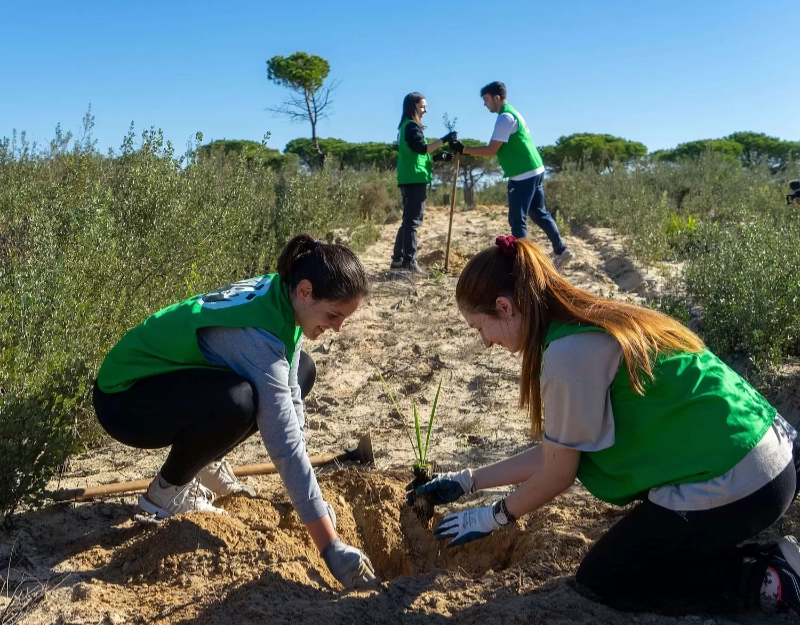
Doñana is Europe’s most important wetland: a mosaic of marshes, forests and dunes that shelters hundreds of thousands of migratory birds and the Iberian lynx. Drought, climate change and wildfire are pushing Doñana to the edge. In 2017, the Las Peñuelas fire burned more than 8,000 hectares. The project will create a more diverse and fire-resilient habitat while involving local people and volunteers in planting, maintenance and monitoring. By supporting this project, you will help bring life back to a damaged part of Doñana and strengthen a wider restoration effort developed over decades. Together, we can give one of Europe’s most extraordinary natural landscapes a stronger future.
Location: Espacio Natural de Doñana, Andalusia, Spain
Project Type: Restoration, Wild Places, Wildlife, Forest

Severn Rivers Trust
The Forest of Dean’s rivers should be thriving havens for wildlife, but habitat loss and poor water quality have left many struggling. With EOCA’s support, Severn Rivers Trust will create over a hectare of new wetland at Westbury Court Gardens, a richer home for fish, amphibians, insects and birds. The wetland will also filter pollutants, improve water quality in Westbury Brook and build climate resilience. Local schools, volunteers and community groups will join planting days, guided walks and citizen science, reaching at least 250 people and helping build skills, knowledge and a lasting connection to the rivers and wetlands that make the Forest of Dean special.
Location: Westbury Court Gardens, Forest of Dean District of Gloucestershire, England
Project Type: Water, Restoration

Rewilding Portugal
After centuries away, beavers are finding their own way back to Portugal, with sightings near the International Douro Park. But the rivers they need are choked by invasive trees and stripped of native plants. Along three Douro streams, we will clear invasives, plant 5,000 native trees and build two small “beaver-style” dams to help water linger and life return, giving beavers a head start before they take over the engineering themselves. Your vote can help bring these rivers back to life and welcome Portugal’s beavers home.
Location: Parque Natural do Douro Internacional, Portugal
Project Type: Water, Restoration, Wildlife, Wild Places, Forest

Io Non Ho Paura Del Lupo
The otter is finding its way back to Italy. After decades away, a young otter found dead beside the Magra River was a poignant sign of its return, and of the dangers it faces. Along the Taro, Vara and Magra, litter, crumbling barriers and damaged habitats still stand in its way. “Give Rivers Back to Otters” will restore a side channel to protect a heron colony, bring back native white water lilies, plant trees, install nesting boxes and clear illegal waste. Hundreds of people will help clean, explore and care for these rivers. A living river is a home for wildlife and a shared treasure for us all.
Location: Taro, Vara and Magra catchments, Northern Apennines, Italy
Project Type: Restoration, Wildlife, Wild Places, Clean Up, Water

Hirola Conservation Program
With only an estimated 500 hirola antelopes remaining in the wild, we stand at a critical moment in the fight to save one of the world’s most critically endangered antelope species. Every individual matters, and every action brings hope. Our project is committed to giving the hirola a fighting chance through habitat restoration, community empowerment, environmental education, and public awareness. By working hand in hand with local communities, we aim to restore the hirola’s habitat, inspire a new generation of conservation champions, and build a future where people and wildlife thrive together.
Location: Arawale National Reserve, Garissa County, Kenya
Project Type: Wildlife, Wild Places, Restoration

Wild Care Nepal
Koshi Tappu in eastern Nepal is a Ramsar-listed wetland and a stronghold of the rare fishing cat. But invasive water hyacinth now smothers about 70% of the buffer zone’s wetlands, harming fish, wildlife and the people who depend on them. Wild Care Nepal will work with indigenous Malaha fishing communities to clear 100 hectares and restock native fish. It will also create Nepal’s first fishing-cat ecotourism, training 18 local guides and supporting ten women-led homestays, so protecting wetlands brings income to local families. By linking healthy wetlands with local livelihoods, the project aims to secure a future for fishing cats and the communities who share their home.
Location: Koshi Tappu Wildlife Reserve, Nepal
Project Type: Restoration, Water, Wildlife, Wild Places

Rissa Citizen Science
Kelp forests are one of the most biodiversity-rich ecosystems on Earth. They are underwater jungles that absorb CO2, nurture fish and shelter hundreds of marine species. In Norway, over 80% of kelp forests have vanished, as overfishing removed the predators of sea urchins, which multiplied and grazed kelp into barren deserts.That’s where the Kelpers come in: community members who dive into ice-cold Arctic waters near Tromsø twice a month, all year round. Since 2023, over 700 volunteers have cleared urchins, and kelp is returning. Help us sustain this momentum and reach our goal of bringing kelp forests back to Northern Norway!
Location: Tromsø, Norway
Project Type: Restoration, Water

Lao Conservation Trust for Wildlife
The Sunda pangolin is one of the world’s most trafficked mammals, and it is Critically Endangered. In Laos, hunting threatens it even inside protected forests. Through Guardians of the Forest, Lao Conservation Trust for Wildlife will protect 3,000 hectares of pangolin habitat in Phou Khao Khouay National Park, with four local rangers using thermal drones and camera traps. Five villages will join conservation workshops, and two rehabilitated pangolins, one an orphan rescued at three days old, will be tracked after release. By following their movements and habitat use, we aim to improve future release practices and strengthen pangolin conservation nationwide.
Location: Phou Khao Khouay National Park, Laos
Project Type: Forest, Wildlife

Callisto – Wildlife and Conservation Society
Brown bears in Greece rely on fruit from early summer to autumn, and mountain orchards were once a vital food source. As rural communities declined, those orchards were abandoned, pushing hungry bears towards villages, beehives and livestock, and sometimes to retaliatory killing. In the Drama region, the Fruitful Coexistence project will bring abandoned orchards back to life. Locals trained by experts will prune and graft trees and clear overgrowth, while electric fences protect farms and apiaries. With a reliable natural food supply, bears have less reason to approach settlements, reducing damage and conflict. By tackling the root cause, the project aims to secure the long-term survival of the species and lasting coexistence with local communities.
Location: Drama region, northeastern Greece.
Project Type: Wildlife, Restoration

Camino Verde
In the Peruvian Amazon, Camino Verde works with indigenous communities to restore degraded forest and build livelihoods rooted in biodiversity. Families are replanting endangered rosewood alongside native species, earning income from sustainably harvested leaves and branches used for essential oil, with no trees cut. They are also keeping native stingless bees, vital forest pollinators, whose medicinal honey brings extra income. Working with over 180 families across 12 communities, the project combines traditional knowledge, biodiversity protection, and sustainable forest-based economies.
Location: Yaguas National Park, Loreto Region, Peru
Project Type: Restoration, Forest
What happens next? Once voting closes, EOCA will check and verify the results before announcing the projects selected for funding. The public vote is one route to EOCA funding. Further projects can receive support through a separate members’ vote or direct funding from individual member companies.
